Learning Outcomes
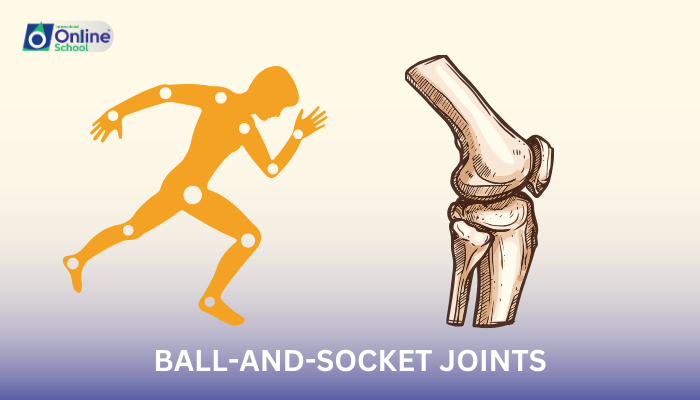
i. Identify ball-and-socket joints in the human body.
ii. Describe the range of motion provided by ball-and-socket joints.
iii. Understand the functional significance of the design of ball-and-socket joints.
i. Identification of Ball-and-Socket Joints
Definition: Ball-and-socket joints are a type of synovial joint where a spherical bone head (the ball) fits into a cup-like depression (the socket) on another bone.
Examples: The primary ball-and-socket joints in the human body are the shoulders (glenohumeral joints) and the hips (acetabulofemoral joints).
ii. Range of Motion
Movements: These joints allow for multi-axial movements, including flexion-extension, abduction-adduction, and rotation.
Mobility: The ball-and-socket design allows for the greatest range of motion of any joint type in the body.
iii. Functional Significance
Shoulder Joint: The shoulder joint combines the mobility provided by the ball-and-socket articulation with the stability offered by surrounding muscles, tendons, and ligaments. This joint allows for the complex movements necessary for tasks involving the hands and arms.
Hip Joint: While also allowing for extensive movement, the hip joint is particularly designed for weight-bearing and stability, accommodating the stresses of standing and locomotion.
In conclusion, ball-and-socket joints are integral to the human body's movement and functionality, providing a wide range of motion while maintaining stability. Their unique design is essential for complex limb movements and supporting body weight during various activities. Understanding the anatomy and biomechanics of these joints is important for professions that deal with human movement, injury prevention, and rehabilitation.
